
SpaceX Changed the Rules Before Its IPO
Now index funds and your retirement account are at risk


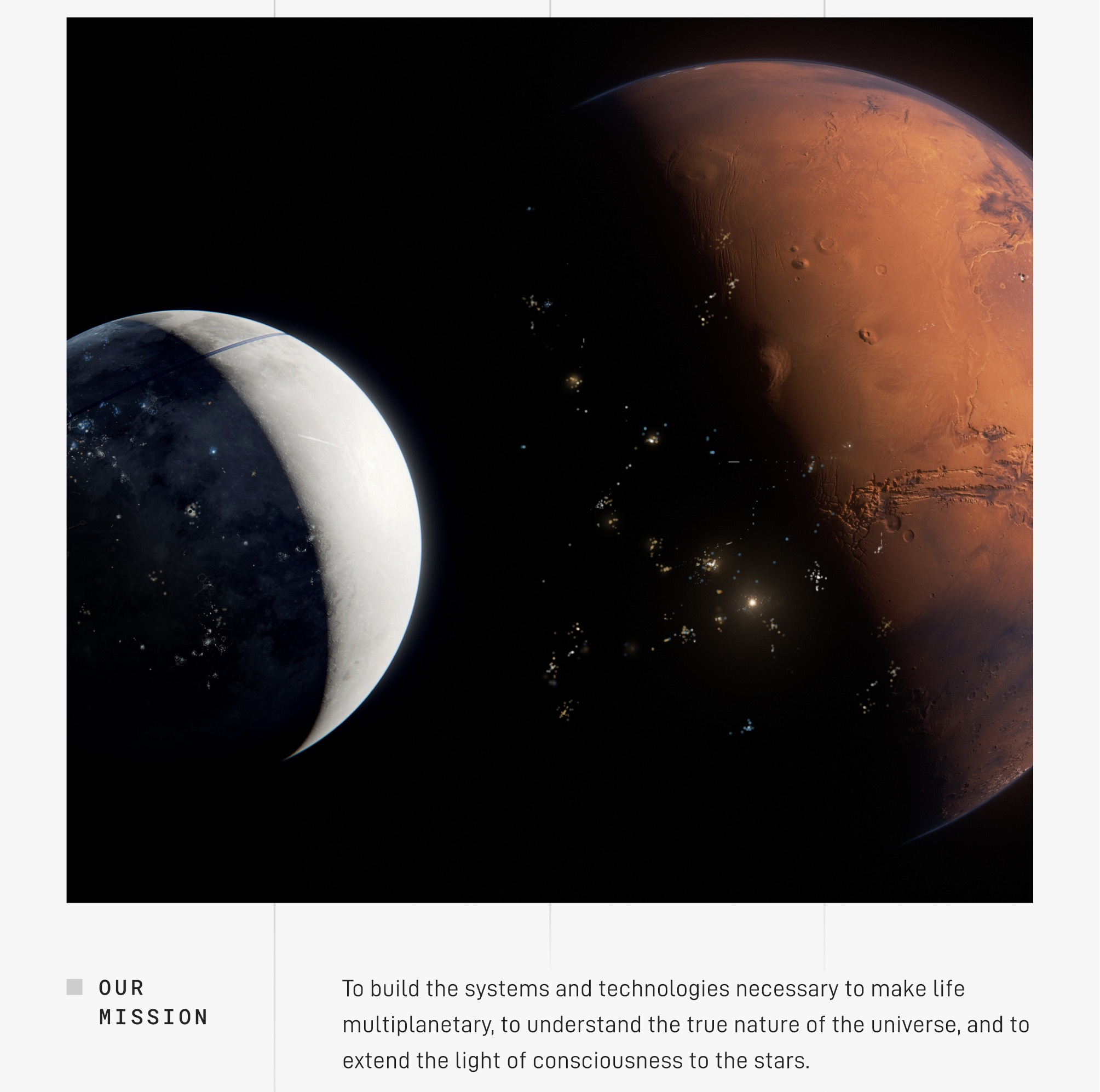
When you read through the SpaceX S-1 filing ahead of its IPO, it’s easy to feel inspired by a larger mission. Part of the explicit mission statement is “to extend the light of consciousness to the stars.” The opening pages contain colorful photographs of rockets, space, and Mars alight with colonies.
Even Elon Musk’s pay package is contingent on establishing “a permanent human colony on Mars with at least one million inhabitants.”
It’s hard not to want a slice of that vision.
The problem is it’s just that. Vision.
SpaceX has a targeted valuation of $1.5 trillion or more despite having lost $4.9 billion in 2025 and $4.3 billion in the first quarter of 2026 alone. Much of those losses are attributed to acquiring xAI, but regardless, the only real, dependable business under the SpaceX umbrella is its Connectivity segment (Starlink).
Total SpaceX revenue for 2025 was under $19 billion, which is very modest for such a moonshot targeted valuation.
But the valuation story is not what concerns me the most. Many retail investors will buy into this on hopes and dreams, not fundamentals. That’s their right and risk.
What troubles me is that many others in the market may be forced to buy into SpaceX’s lofty valuation too. Through index funds. Through their retirement accounts.
The exchanges and indexes want a piece of this action. Not just from SpaceX, but from the AI pipeline that follows. Namely, OpenAI and Anthropic.
Nasdaq and S&P have both loosened their rules immediately ahead of the SpaceX IPO. And SpaceX is now incorporated in Texas, not Delaware, which has far fewer investor protections and guardrails on companies that allow massive grants of super-voting shares and who regularly engage in self-dealing (like SpaceX buying $131 million of Cybertrucks from Tesla at full retail prices).
The structure basically ensures that Elon can never be checked let alone fired. And it allows him to tap into trillions of dollars of retail investor money even if SpaceX never reaches profitability.
Without discipline and good governance, will we ever extend the light of consciousness to the stars?
The S&P and Nasdaq rule changes
Some of the worst governance issues are not from SpaceX itself, but from the indexes that want a taste of the SpaceX dinner the minute it’s served. Two of the biggest indexes — the S&P 500 and the Nasdaq-100 — finalized or initiated major rule changes within weeks of the SpaceX S-1 filing.
Neither index explicitly names SpaceX as a catalyst. But these rule changes are not a coincidence, especially when the exposure to trillions of dollars in retail investor and retirement funds are at stake.
Following investor backlash over Snap's 2017 IPO, which offered public shareholders zero voting rights, S&P imposed a dual-class ban (although certain existing firms like Google and Berkshire were grandfathered in). They reversed this ban in 2023, reopening the index to companies with multi-class voting structures. But now S&P wants to make two additional major changes ahead of the SpaceX (and other big AI) IPOs.
The first is cutting what’s called the “seasoning period” from 12 months to 6 months. This is a price discovery mechanism so the market can effectively decide how much a stock is truly worth. Markets need sufficient time to do this. It needs to see how SpaceX performs with all the disclosures required of a public company. Six months of seasoning is only 2 quarters of public reporting.
The second big change is waiving profitability requirements for megacap companies. Remember how I said that SpaceX loses billions per year and even over $4 billion last quarter? Under the new rules, that wouldn’t matter now. But under the old regime, SpaceX would have to turn a profit before being included in the S&P 500.
Unlike the S&P, the Nasdaq-100 has never had a profitability requirement. But they did make a major rule change that was completed in May 2026. Just this month!
Instead of a seasoning period of three months with annual reconstitution in December (which means a major IPO could wait a full year before entering the index), the timeline is now much shorter. Any company ranking within the top 40 by market cap with at least 7 trading days on exchange is eligible for inclusion (Nasdaq reviews now on a rolling quarterly basis).
These rule changes have huge implications for owners of retirement funds and index funds that track them.
They force passive funds that track either index to become forced buyers of SpaceX significantly faster. And in S&P’s case, it makes what was previously impossible, possible, without any profitability threshold.
These rule changes open the floodgates to trillions of dollars of retail investor money that would not have been otherwise available. All for a dream of colonizing Mars and extending human consciousness into the universe while bleeding billions for the foreseeable future.
Before Mars there was Texas, where everything is bigger, including governance problems
When I say SpaceX changed the rules, they really achieved this by changing jurisdictions in 2024. Delaware laws out, Texas laws in.
There are a few notable legal benefits to being incorporated in Texas instead of Delaware. Almost none of them benefit shareholders.
SpaceX, for example, has made it nearly impossible for shareholders to bring what are called derivative lawsuits. These are lawsuits brought by shareholders against executives or the board for breaching their fiduciary duties to the company (e.g., the lawsuit against Elon’s Tesla pay package).
To bring a derivative lawsuit against SpaceX, shareholders will need to own at least 3% of the company’s stock (a rule that was recently upheld in this Texas case). At a $1.5 trillion valuation, that’s $45 billion worth of SpaceX.
Delaware doesn’t allow this type of restriction, but Texas does. You can probably get why Delaware prevents it — no ordinary shareholder has $45 billion in stock of a megacap stock like SpaceX. And index funds or pensions that might don’t typically bring these types of lawsuits.
So ordinary shareholders who might want to argue that Elon Musk, other SpaceX executives, or the board filled with Elon’s friends aggrieved them in some way will only have one legal recourse here — no derivative lawsuits.
But thankfully there are always securities fraud lawsuits. And as Bloomberg’s Matt Levine always says, “everything is securities fraud.” If you’re a shareholder who thinks a company lied or materially misled people in public statements, you can express your dissatisfaction in a securities fraud lawsuit (of course, none of this is legal advice).
Although SpaceX is even trying to limit this avenue of legal recourse. Instead of permitting lawsuits in federal court, their S-1 is sending shareholders to Texas Business Court. And you will just have to guess at how friendly that forum will be for Elon Musk compared to federal courts in New York or California. There’s limited case law in this Texas court (unlike Delaware’s 100+ years of business law precedent), and Texas obviously wants to keep Elon happy in their state.
The US Securities and Exchange Commission has also been considering giving public companies the ability to require arbitration of securities fraud lawsuits. SpaceX doesn’t go this far, but if someone successfully challenges the Texas Business Court forum choice, they will probably find themselves in arbitration (which also puts them at a disadvantage).
These are just two of the many examples of how Texas is a far friendlier venue for businesses than shareholders. They’re far less likely to question Elon’s astronomical pay package (pun intended) or the self-dealing he’s been engaging in since his SolarCity days. So if he wants SpaceX to buy 1,500 of his poorly selling Cybertrucks from Tesla, there’s little anyone can do to stop him.
Elon moved from the one standard in Delaware that held him accountable to one in Texas that presumes he doesn’t need to be.


What this means for investors and future IPOs
All of these rule changes come down to this for investors — passive funds may be quickly forced to own governance structures they’ve publicly opposed because of SpaceX’s (almost immediate) inclusion in major indexes like the S&P 500 and the Nasdaq-100. And if they are forced, they’ll be owning shares in a company with big dreams, but big losses as well. With no indication that will change in the near future.
A science fiction future is being forced on average, ordinary investors. And most passive index fund owners probably don’t even realize it.
This SpaceX S-1 also sets a potential template for future IPOs. It’s reasonable to conceive of a world where founders demand “the Elon Musk IPO structure.” Where they demand complete board control, full protection from ever being fired, and muzzles on all shareholders, allowing them limited to no legal recourse.
One of the primary reasons that America has led the world in capital markets for decades is because of good, predictable governance. Shareholders have historically relied on fundamental truths — if executives or boards don’t act in their best interests, or if they aren’t loyal to shareholders, they face serious consequences.
Now that’s a little less clear. Because as the SpaceX S-1 states:
“Mr. Musk and his affiliates are not restricted from owning assets or engaging in businesses that compete directly or indirectly with us and will not have any duty to refrain from engaging, directly or indirectly, in the same or similar business activities or lines of business as us.”
Elon Musk arguably has more flexibility and freedom as the CEO of SpaceX than any public CEO in history. And shareholders can’t challenge it too easily.
But perhaps that’s the point. Maybe if you want to reach for the stars you need to be a little (or very) crazy and you just need to let guys like Elon cook. Maybe governance is the least of our concerns and if you’re buying into SpaceX, you buy knowing that you’re entering Elon’s benevolent dictatorship.
The big problem, however, is that passive index fund owners don’t all agree. They don’t unanimously want their funds investing in corporate dictatorships regardless of S&P and Nasdaq rule changes. This wasn’t a problem when SpaceX was a private firm. The institutional and accredited investors that threw down knew what they were getting themselves into.
But grandma’s retirement fund doesn’t.
The trouble with extending the light of consciousness to the stars is that you need lots of money. Including grandma’s retirement fund. Which is why space travel has historically been the business of governments, not private (or public) companies.
Elon’s challenge is that private capital has limits. For some 20 years he’s reached those limits.
So grandma is next.
If you’re not a paid subscriber and want to support this type of work, consider becoming one today. We publish thoughtful, analytical essays on law, finance, and geopolitics every Monday, Wednesday, and Fridays, with deeper breakdowns behind the Wednesday paywall. Thank you for being here.
Pardon my lengthy comment, you are pointing at the right thing, but I believe that the problem is even worse than you describe. Musk and his soul brother Donald Trump have demonstrated that the rules of financial reporting and corporate governance no longer apply to them in any practical sense, and that the institutions built to enforce those rules will not stop them.
The structure exists for a reason. GAAP grew out of the 1929 crash, when capital markets nearly destroyed themselves because no one could trust the numbers on a balance sheet. Independent boards, audit committees, fiduciary duty, and disclosure obligations were built up over decades in response to Enron, WorldCom, and the 2008 collapse — each rule a specific answer to a specific failure. Sarbanes-Oxley and Dodd-Frank were not paperwork. They were the country's hard-won response to what happens when accountability erodes.
Let's look at what these two have actually done.
A Delaware court twice struck down Musk's Tesla compensation package, finding the board so captured that the deal could not stand. Musk's answer was to move Tesla's corporate domicile to Texas, push through a state law allowing companies to impose a three-percent ownership threshold for shareholder derivative suits, and adopt that threshold in Tesla's bylaws. The practical result is that only Musk himself and three large asset managers now have standing to challenge anything the board does. The same board has just proposed an equity award larger than the one a court already voided. Meanwhile xAI was folded into X at valuations Musk set himself — related-party transactions any auditor would have flagged a generation ago.
Trump's New York fraud judgment documented a decade of inflated valuations, with one set of numbers for lenders and another for tax authorities. This past August the appellate division affirmed the finding of fraud while vacating the monetary penalty as constitutionally excessive. The fraud is now an established fact; the consequence is gone. From the Oval Office he is running a meme coin, a stablecoin venture, and a family DeFi platform that pays the Trump family seventy-five percent of net token sales. His 2025 financial disclosure listed more than fifty-seven million dollars in income from World Liberty Financial alone, with sovereign money flowing in from Abu Dhabi, Pakistan, and elsewhere. The traditional separation between officeholder and private business has not been blurred. It has been abandoned in public view.
The pattern in both cases is the same. The rules are not being evaded by clever lawyers; they are being walked past by men who have correctly judged that no one with the authority to stop them will do so. Captured boards, friendly state legislatures, sympathetic appellate panels, and a Justice Department that pardons rather than prosecutes have all done their part. GAAP and corporate governance are not self-enforcing. They are agreements among institutions that took ninety years to build and a few news cycles to disregard.
What we are watching is not corruption in the ordinary sense. It is the demonstration that, for a sufficiently wealthy and politically protected actor, the framework that has disciplined American business since 1933 is now optional.
Delaware's 100+ years of case law didn't happen by accident.
It evolved because companies kept trying to screw shareholders in creative new ways. Moving to Texas isn't some libertarian win. And the SEC even considering mandatory arbitration on top of that is just... stacking the deck at every layer.
Happy Friday John